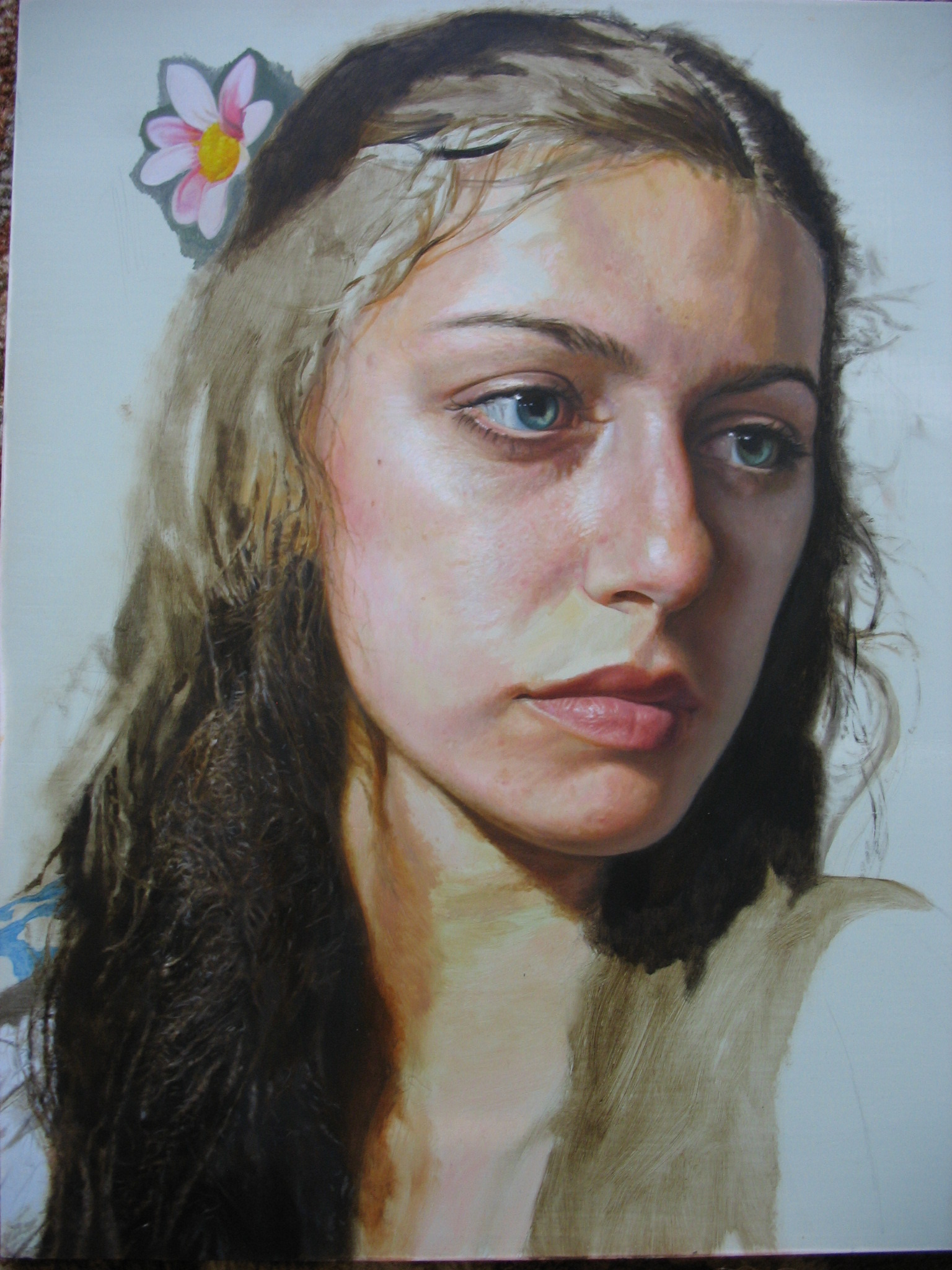
Portrait of Jim (Using Value & Color Shapes in the Underpainting to Describe Form)

February 19, 2014

Hello all,

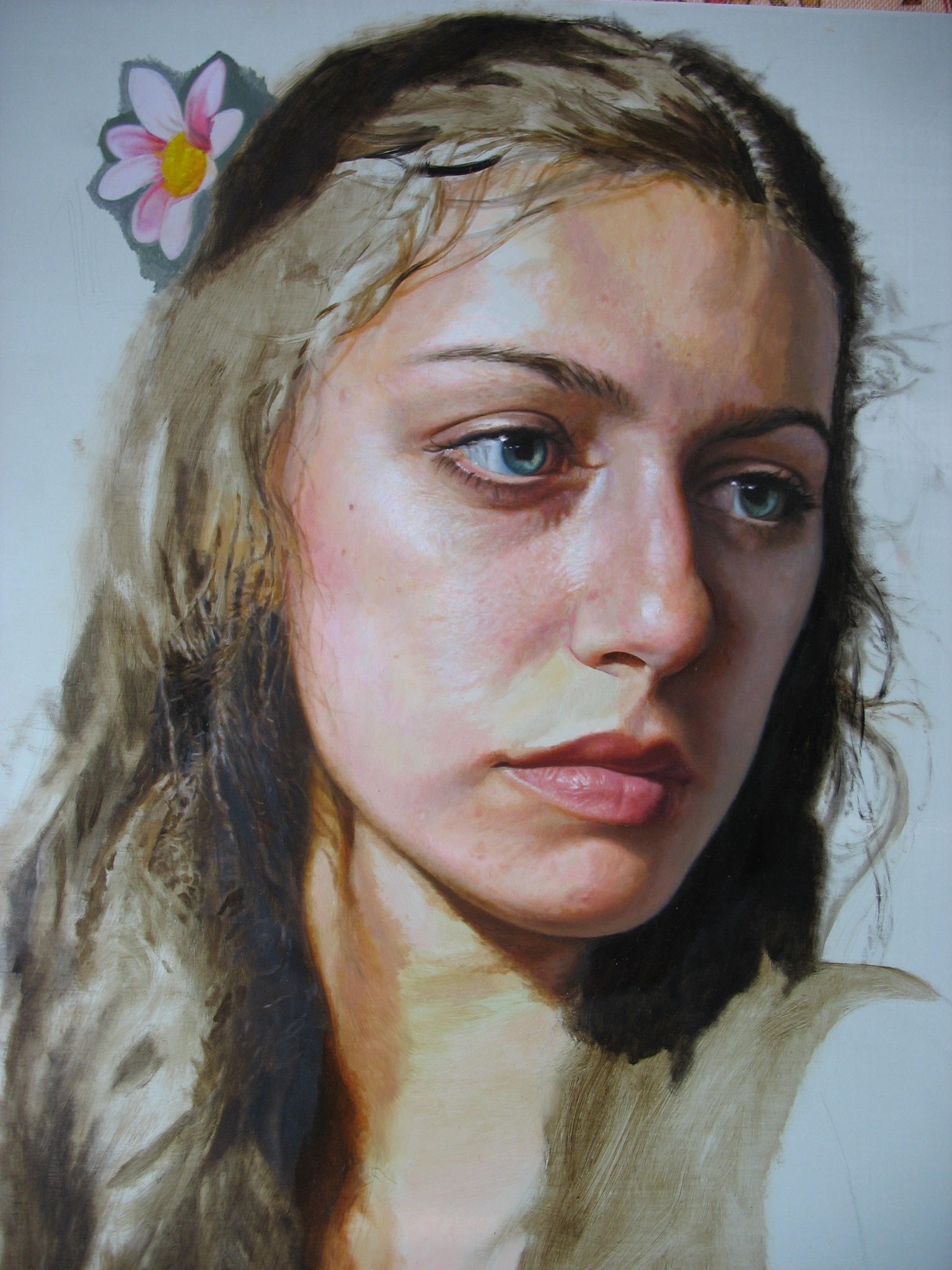
I’m back with some new content!!! After nearly a two year lapse, I’ve rediscovered my voice through video, and was inspired to post this one of my latest portrait of Jim. This is raw, unedited footage of me explaining my process and the technical endeavors that I encounter in painting. Because I work soo slow, parts have been sped up to show more content. I’ve been experimenting with a lot of painting and drawing videos using this wonderful Nikon camera that I got for my birthday, and, hopefully at some point, I will edit these videos and create a DVD series of step by step procedures that will eventually be available to purchase on my website. A few students of mine encouraged me to do this, and I’m so glad they did as it helps me to become a better teacher! This video shows me working out a portrait in, what I call the “dead color” stage. As this piece develops, my colors will continue to shift with cooler glazes. I highly recommend watching the video in full screen version to observe more of the fine detail. Enjoy and happy painting!


Lighting Your Subjects

May 20, 2012

I have wanted to write about this topic for a while, as it is such an important and fundamental step that every representational artist has to face prior to beginning any drawing or painting.  As I’ve discussed in previous blogs, light, or rather the play of light and shadow can define, and illuminate sculptural form, but it plays two other very significant roles which often aren’t addressed.   Lighting can make or break a composition, and can be used to enhance an over-all feeling or mood within a work of art.  In this post, I’m going to discuss light by using examples of great masterpieces and touch briefly on how I use lighting in my own work, but first, I’d like to focus on four different types of lighting that commonly occur in old master paintings.

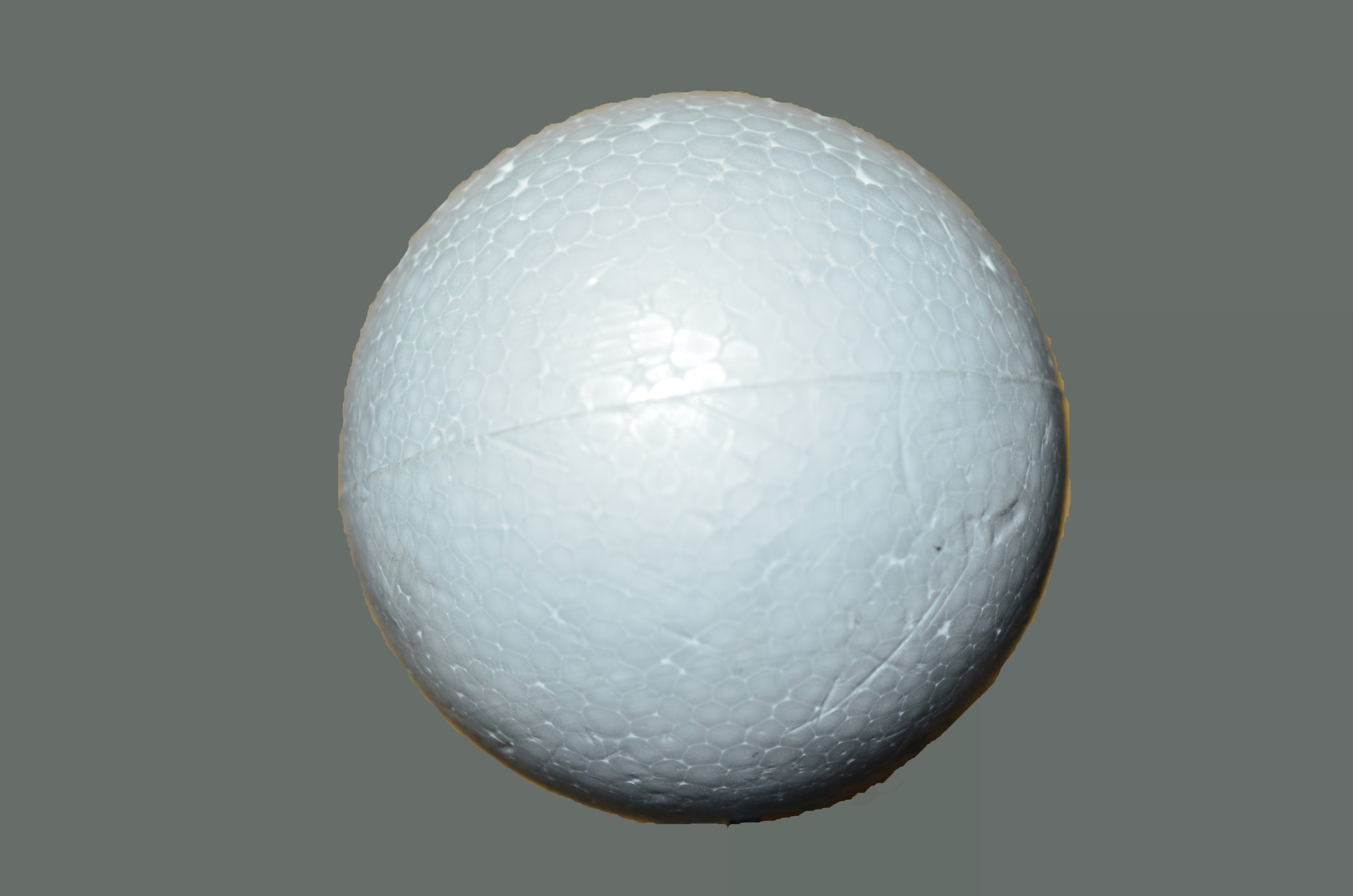
The first type of lighting display that I’d like to discuss has been used widely through-out the history of art particularly in portraits and figuritive work for obvious reasons.  I call it three-quarter lighting, but I’ve also heard it referred to as form lighting. The photo below shows how this looks on a simple sphere. I’ve positioned the light above and slightly to the left of the sphere at approximately a 45 degree angle. The result is an object that displays an area of light that is about two-thirds, to three-quarters as great as the shadow area.  The shadow edge (the area where the shadow and light separate) reflects the curvature of the sphere, providing a very clear description of the specific form of the object.  It is interesting to note in each of these lighting displays, how great the area of half-tone is as it moves towards or away from the high-light. Also, how sharp or soft is the high-light?  Is it a crisp pin-point or does it spread out gradually?
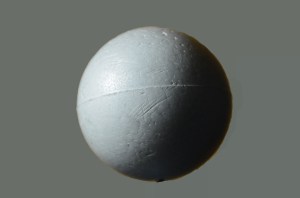
The second type of lighting I’d like to discuss is often used to accentuate the outer edges of form, creating a distinct boundary between the object and background.  This is clearly demonstrated in the photo below.  The light is positioned in front of the sphere illuminating the center.  The gradations within the light mass are very limited.  Only a very tight area of shadow can be seen around the lower contour edge.  I call this front lighting. This can be a tricky choice of lighting, as it tends to flatten out the appearance of form.  Graphic artists and fashion designers utilize this type of lighting because it allows them to display bold outlines and flat silhouettess.  One of the greatest draftsmen of all time, Jean AugusteDominique Ingres, used front lighting to emphasis the lyrical contours of the female form.  I will discuss his work in more depth later.
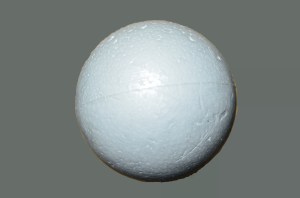
The third lighting display I’d like to discuss is side lighting.  This is one of the most dramatic types of lighting as it causes so much of the subject to become veiled by a dark mass of shadow.  High contrasts of light and dark in nearly equal portions are achieved with this type of lighting effect as seen in the photo below.  The term tenebrism is often used to describe this theatrical approach to lighting within a painting.
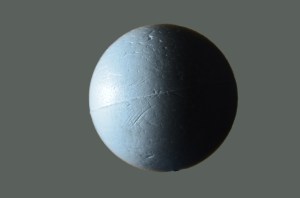
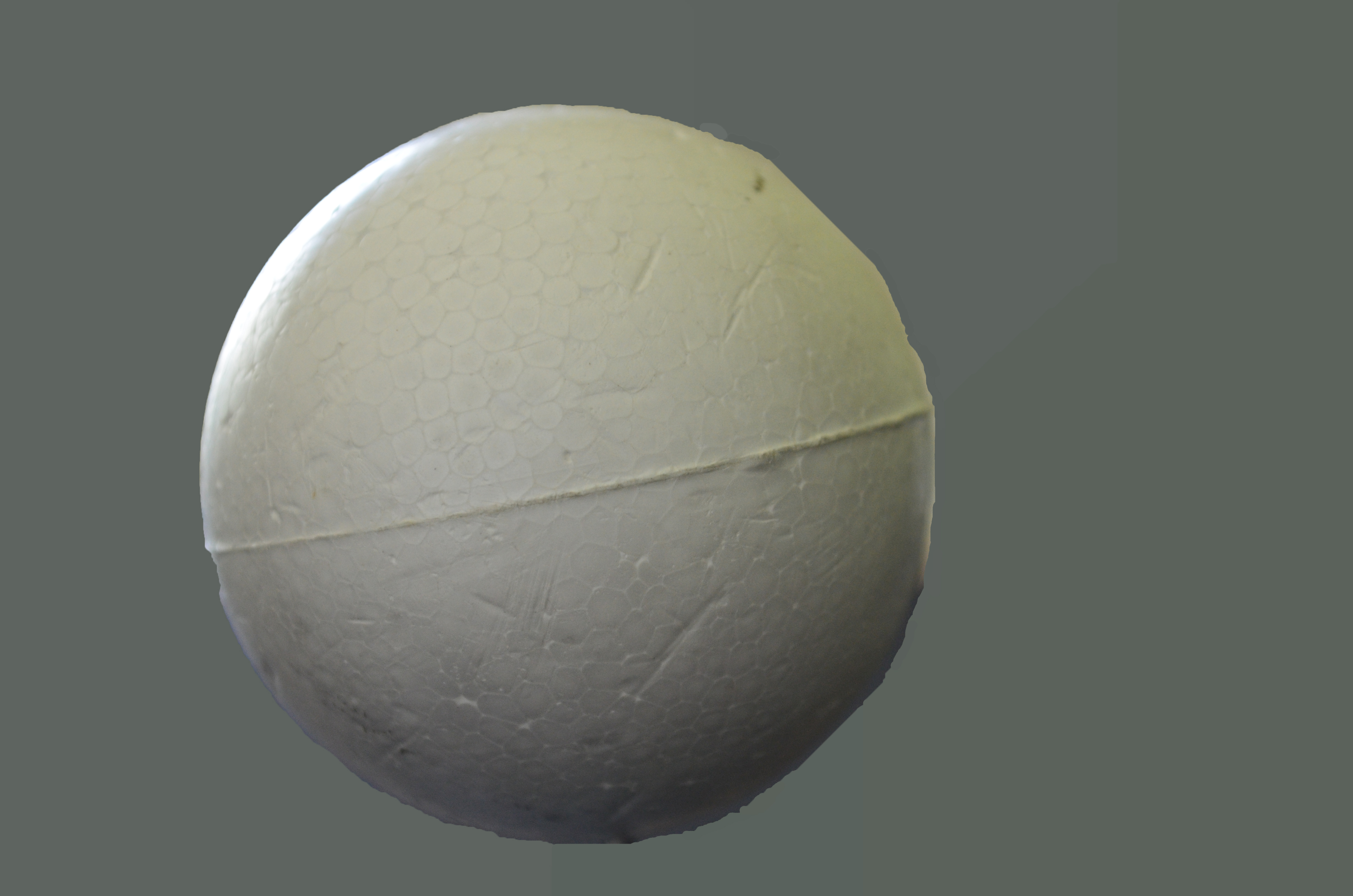
And finally, back lighting, which I consider to be the most difficult of all the lighting effects.  The challenge in this is that the shadows can’t be too dark, and the reflected lights within the shadow mass can’t be too light. If either one is exaggerated, the illusion of form will diminish.  With any type of back light, there has to be a certain degree of reflected light, (the ambient light that bounces off of other surfaces and reflects back into the shadows) therefore back lighting can’t display the same type of dramatic dark shadows that side lighting, or even three-quarter lighting can. To set a subject up with back lighting, there has to either be a secondary, less dominant light source in front of the object, or a reflective surface for the primary light source behind the object to bounce off of and get picked up again within the shadow mass. The key to representing the reflective light, is that it can’t be as strong as the main light source, which, in this case is limited to a tight ribbon around the outer edge of the form as seen on the upper left side of the sphere in the photo below. Notice that there is virtually no half-tone between the edge of the shadow and the light. Artist’s who use back lighting, have to understand the delicate gradations that occur within the shadow mass.  If you observe the value tone, you’ll notice that the polar opposite occurs within the shadow mass here, that occurs within the light mass of the front lit sphere above.
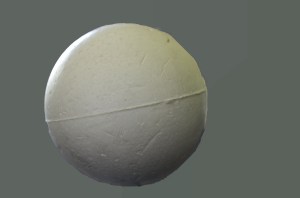
Before I go on, I should make it clear that these are only a few of the different types of lighting effects that can be utilized in a drawing or painting.  Often artist’s will use multiple light sources to achieve a desired effect.  Personally I try to simplify my lighting to one or two sources, as this allows me to most effectively observe form.  Artists who are more interested in emphasizing color over form benefit from using multiple light sources.  As a general rule, I try to limit my shadows to dark, flat shapes and explore the full range of luminous color within my lights. This allows me to make a very clear distinction between my light and shadow. Below are three of my most recent portraits, each utilizing a different type of lighting.
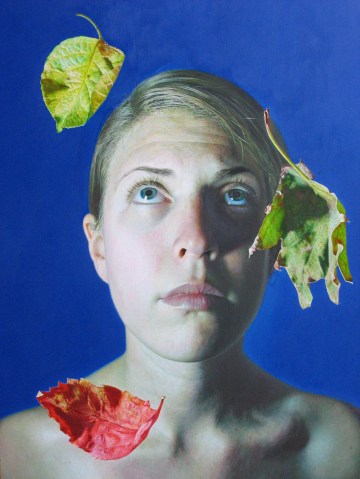
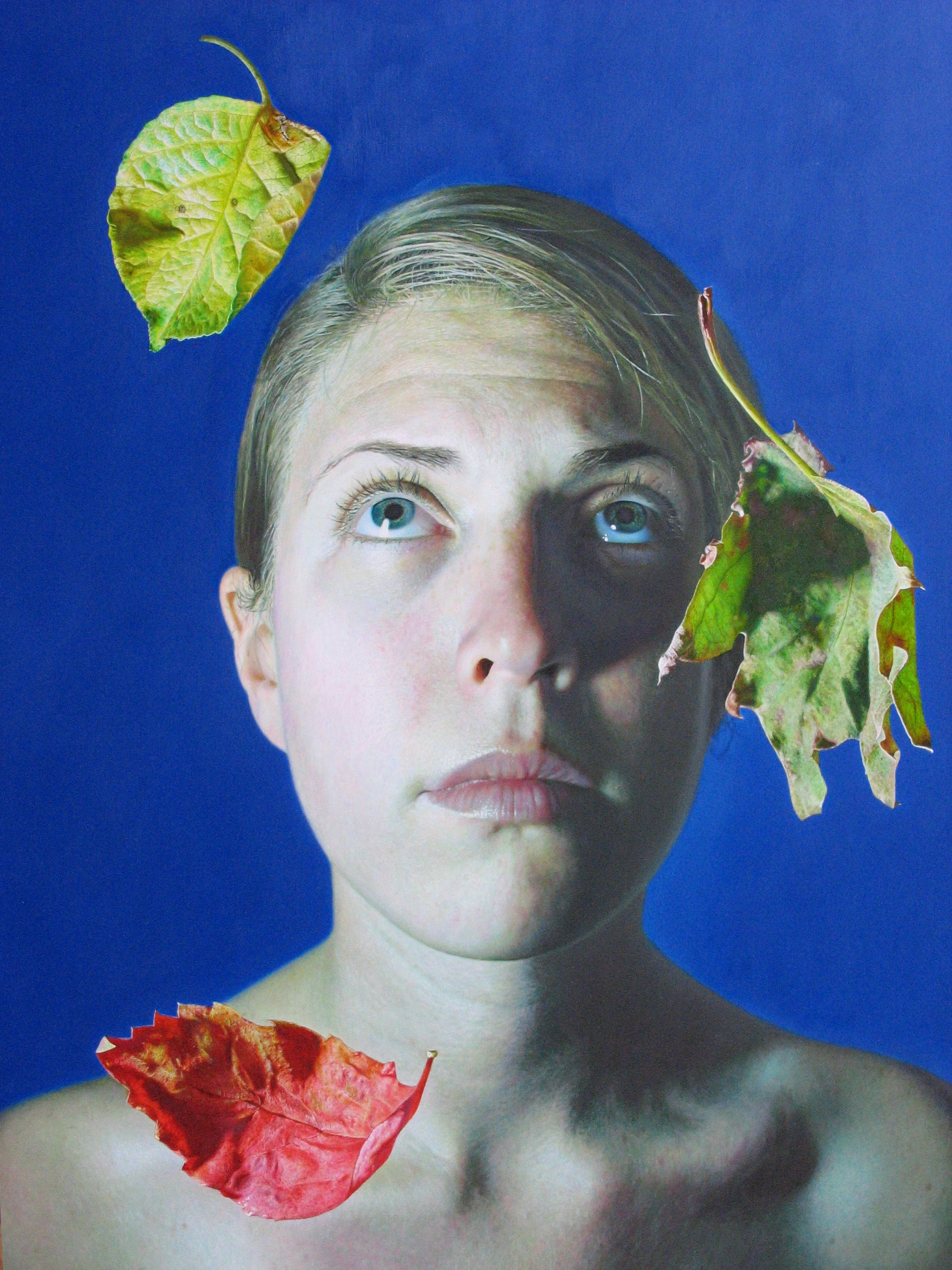
The portrait above was set up with the light source below and slightly to the left side of the model’s face.  The rest of the room was dark so that very little light would be reflected into the shadows. I wanted to create an image that was dramatic, almost theatrical as though she were on a stage, and spotlights were hitting her from below.  I also used cool bulbs to bring out more greens and bue-violets in her flesh tones in an effort to create a slightly eerie mood.
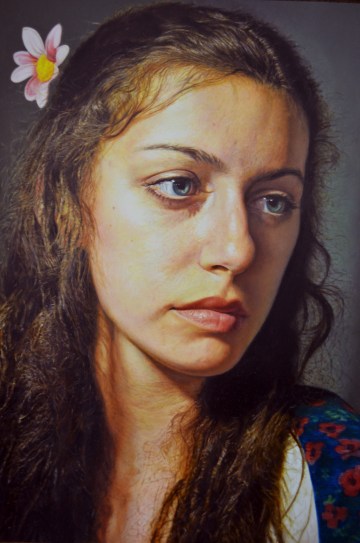
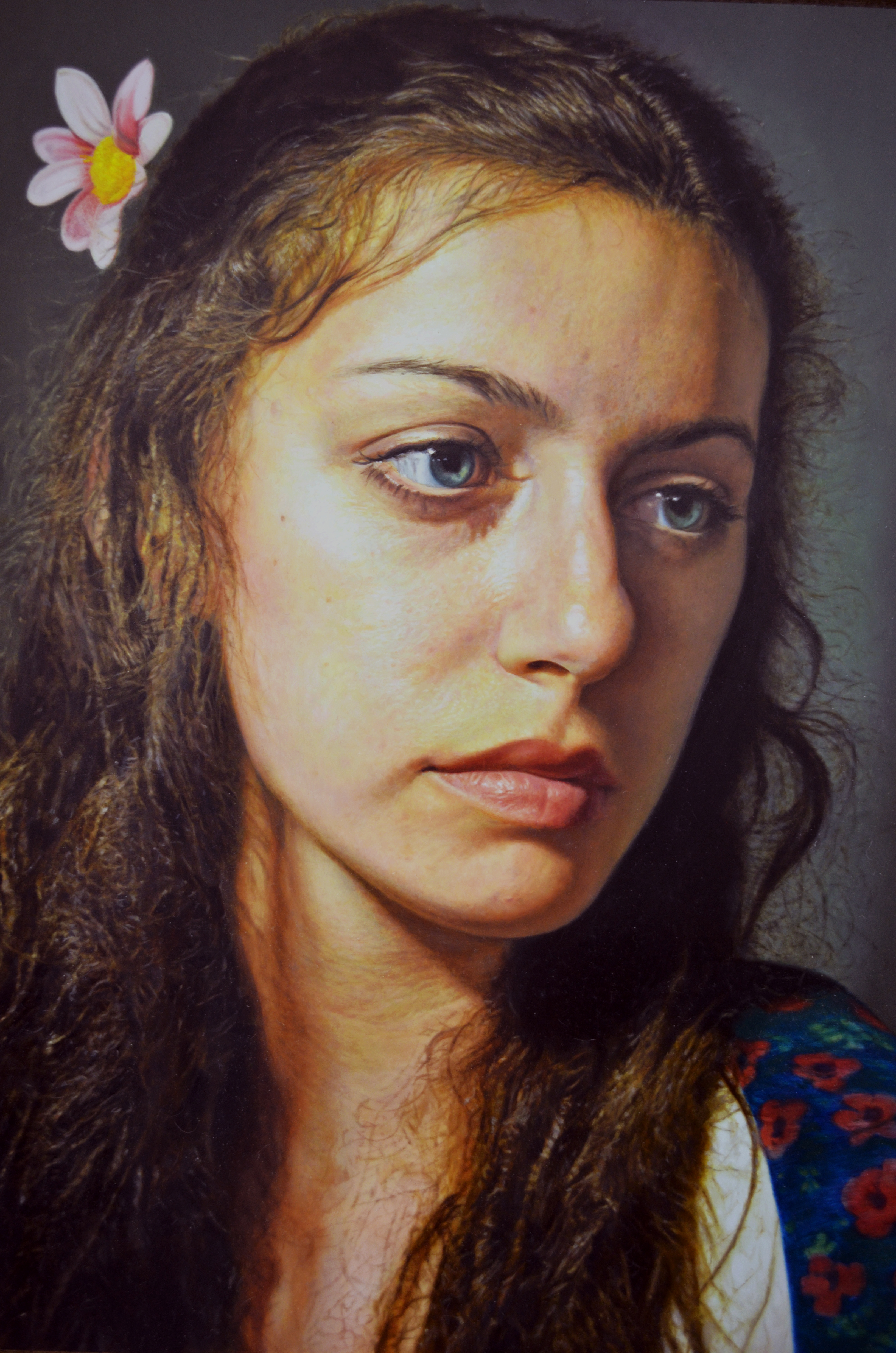
For this portrait, I used the more traditional three-quarter lighting.  The bulb was warm, bringing out the yellows and pinks of Emily’s flesh tones. The shadows are not as dark either, giving this portrait a warmer and less eerie feeling than the one above.
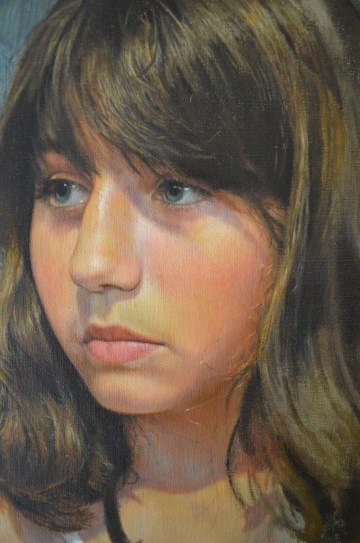
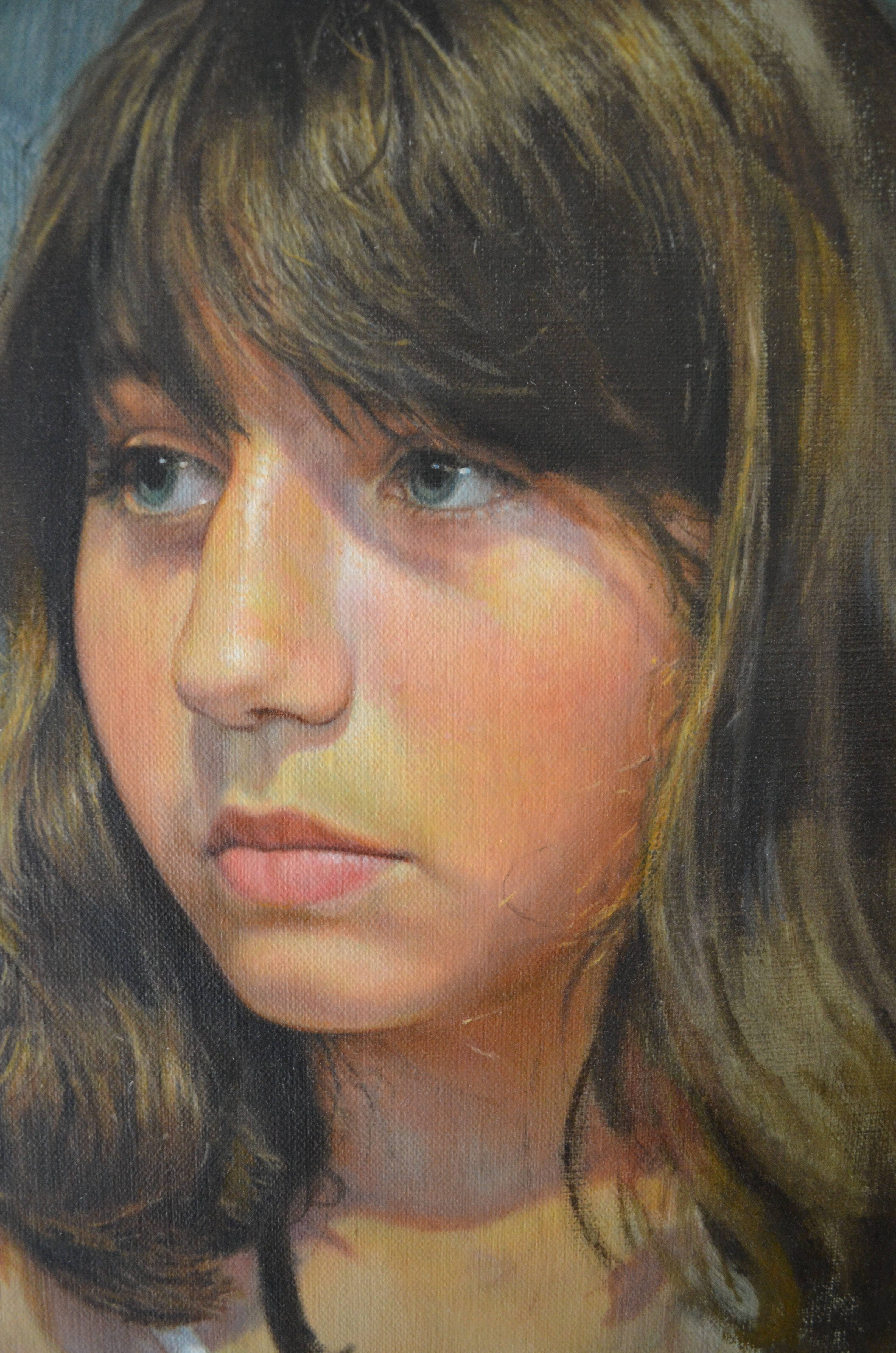
This is a detail of a portrait that I am currently working on.  The lighting in this is slightly frontal but also positioned above the model’s face at a 45 degree angle.  The result creates much softer, and less dramatic shadows than the other two portraits display. I wanted to capture youth and tenderness here, so I specifically chose a lighting effect that would not create harsh shadows. A warm bulb was also used here to bring out the warmer flesh tones. 

Now, finally, I would like to discuss these four different approaches to lighting within some of my favorite old master paintings. Lighting should be thought of as a compositional tool, creating a pleasant arrangement of value patterns which the eye can easily follow.  The artists that I am going to discuss understood this concept and made full use of it.  One cannot talk about composing a painting with light without mentioning Vermeer. Below is one of his many masterpieces.  Here he has chosen to use three-quarter lighting.  The horizontal and vertical lines of the picture frame draw the viewer’s eye towards the center of the canvas where they are held by the calm gaze of the woman. The patterns of light and shadow that fall over her delicate features are very simple yet extremely convincing in representing that basic oval shape of the skull.  The fact that the picture frame is so dark behind her also helps to emphasize the warm glow of light that seems to have a physical, honey-like density to it as it cascades over the folds of her cloak.  The placement of verticals and horizontals here and the specific lighting evoke an over-all feeling of calm-ness and tranquility.

Jan Vermeer “A Lady Writing” 1665?

The next painter I’d like to discuss is Jean Auguste-Dominique Ingres. The painting below represents form in a much more crisp and linear way than Vermeer.  Ingres uses front lighting here to accentuate the curvacious contours of the woman’s figure. Ingres, who also played the violin, felt that music and art shared many similarities, and the variety and flow of contour lines, like well-played music notes, could express lyricism and harmony.  He was not concerned as much with visual truth here as he was with an ideal beauty. The rendering of form is very delicate, using a limited range of tonal values.  Most of the darker shadows happen around the edges of forms, which only help to emphasize the harmonious contour lines that, to him, defined true beauty.

Jean Auguste-Dominique Ingres “The Source” 1856

Now, I’d like to discuss an artist who developed a style of painting that had such a tremendous following, that the term tenebrism (derived from the italian word tenebroso which means murky) is often used when describing his work or the work of his followers. The artist is Caravaggio and the example below clearly demonstrates just how far he was able to push the effects of dramatic light.  He often would set his figures in front of a dark background as seen here, which helps to draw the focus onto the illuminated faces.  It has been said that he would frequently build clay models of his figures and arrange them under different light sources to determine what would best work. It is important to note here, that he was a 16th century painter, so his light sources were candles – not terribly easy to control.  In this composition, it appears as though each figure was lit seperately.  The central figure is the most dramatically lit, his face receiving equal portions of light and shadow, which indicates a side lighting, but his garments and the table cloth have very little shadow on them, indicating more of a frontal light.  This proves that Caravaggio utilized more than one light source within a single painting, enabling him to create the specific light and dark patterns that he desired.

Caravaggio “Supper at Emmaus” 1600

The fourth and final painter that I’d like to focus on is William Adolphe Bouguereau.  He was a 19th century naturalist painter who was capable of portraying, with amazing virtuosity, the ever-challenging back lit figure. His figures in general are painted with such simplicity and ease, that they seem completely natural within their environment.  This can only be acieved by a thorough understanding of the subject, including the nature of light, and the painting below, The Birth of Venus, clearly demonstrates this.  Venus’ figure is limited to soft, pale, pastel-like colors, and all of of the tonal gradations are very subtle, except for the bright halo of light which catches the left side of her torso and trickles down her thigh, indicating a strong back light source. This type of lighting can be quite romantic, and, in this case, it suggests that the sun is just beginning to lower (behind a distant cliff perhaps) and deeper, cooler shadows are forming, but they aren’t very dark yet.   This is something that Bouguereau was definately concious of, as it helped him to soften the forms of his figures and eliminate sharp edges.  The end result, produces the opposite effect that a Caravaggio composition would have, where figures become almost fragmented by the extreme contrasts of light and shadow.

William Adolphe Bouguereau “The Birth of Venus” 1879

“The Birth of Venus” (detail)

Ok so, in closing, I hope that I have shown my devoted readers how significant of a role light can play within painting composition.  The artists that I have selected to write about are some of my personal favorites, but there are many others who utilized lighting in different ways.  I encourage you, the next time you study the work of a painter you admire, to think about what type of lighting he or she used, and why.


Conquering Detail

May 17, 2011

Here is an update (detail) of the study for my “Emily in Flowers” painting.  Exploring the infinite amount of detail and variety of textures in this study has been a fantastic journey for me.  I have become engrossed in the curl of each petal, the delicate veins in each leaf, the flowing strands of Emily’s hair, and, when I finally begin the actual painting, these details will be magnified and elaborated on, creating an even more intensified complexity of colors, shapes and textures.  Each detail will appear in crisp focus as though it were being seen under a magnified lens. This will push the “hyper-realism” to an extreme that I’ve not yet attempted.

When creating a work of art with this degree of detail, I have to mentally focus my attention on small sections at a time.  I could spend half a day rendering a cluster of leaves that make up less than an inch or so of the entire image.  In a sense I am thinking of each small section as a composition entirely in itself, and, when completing an area like this, I have completed a small work of art.  If I focus on section by section in this manner, I feel content with my progress. Over time I will build and piece the clusters of detail together much like a puzzle, and eventually the whole image will take shape. 

Once the study is complete, I may end up scanning it into my computer to make further adjustments on Photoshop.  This step is great for compositional decisions.  If some parts are too busy, for example, I can obscure them with a shadow, or if colors are too bright or dull, I can make the necessary adjustments before I ever put my brush to the canvas.

So far I’ve put close to 150 hours into this study.  I probably won’t post another detail until it is nearly complete which will be a few months down the road.


Combining Mediums

April 29, 2011

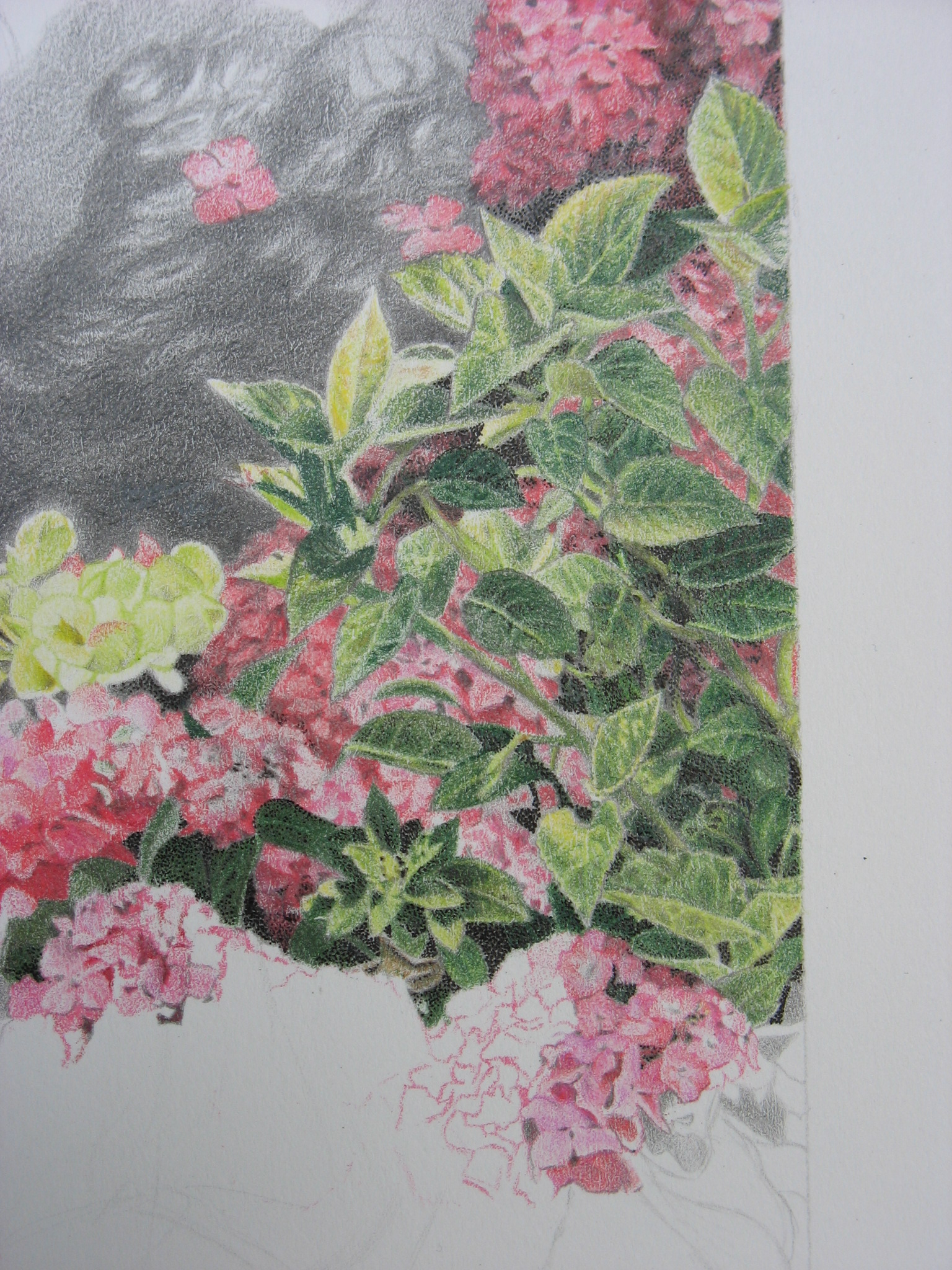
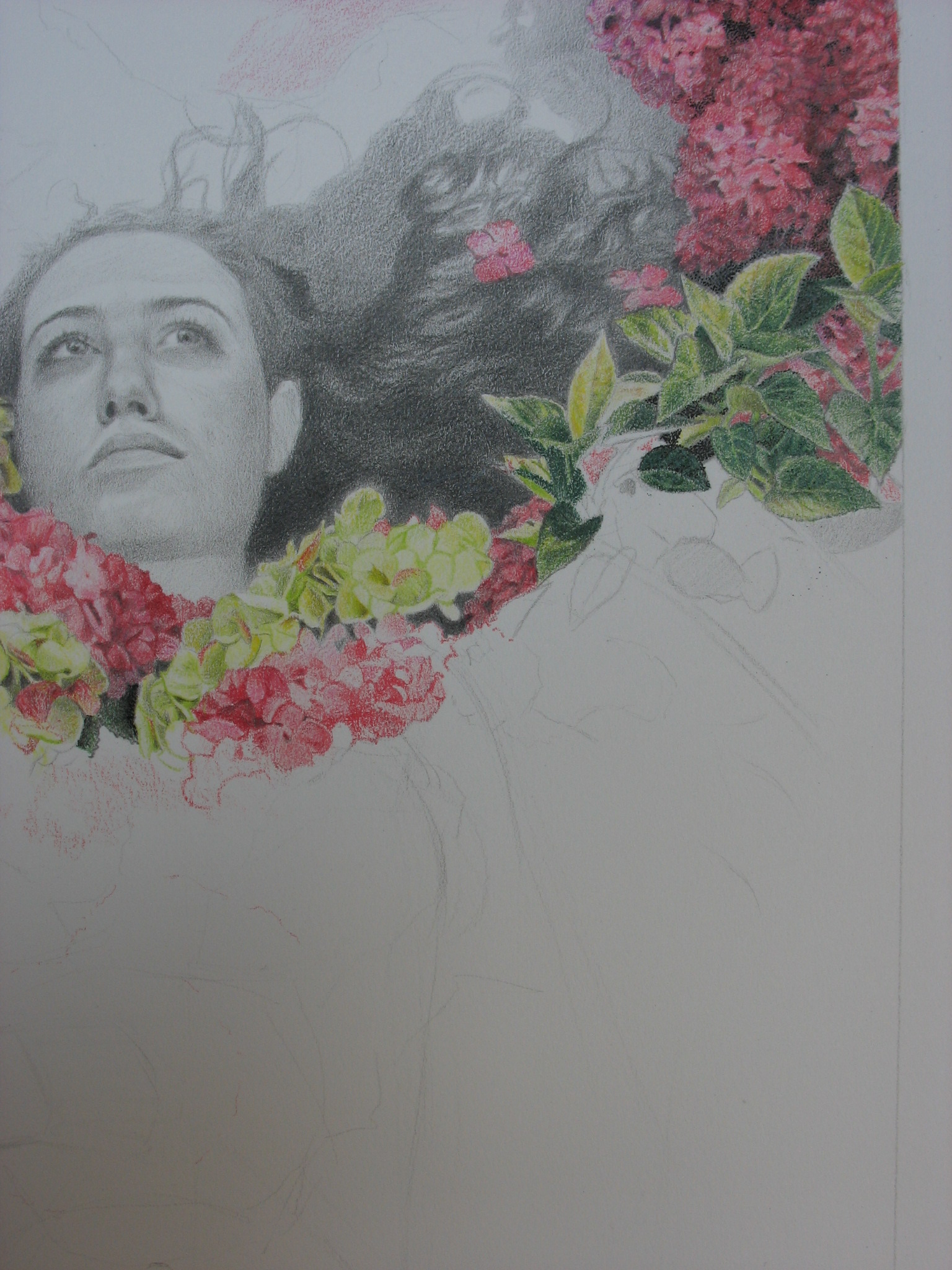
Below are in progress details of the study for the “Emily in flowers” painting, which, hopefully I will begin by the end of the summer.  This will be a challenge for me in many ways.  I am working from a combination of about 35 photos, graphite and charcoal tonal studies of the model and, once they bloom, actual life studies of hydrangeas from my garden.  Because I am working from so many sources, I have to be careful not to make things look pieced together. This is much more difficult than working from a single reference photo. Secondly, pairing Emily’s body with such an abundance of complex and intricately detailed flowers is, in itself, challenging.  Although the painting is more about the flowers than Emily, I still want her presence to capture the attention of viewers. The flowers will be painted in a trompe l’oeil style. Strong splashes of light will dance upon the complexity of shapes and textures, adding a range of brightly contrasted colors and luminous, deep shadows.  All of this will create crazy, chaotic patterns, in which Emily’s soft, creamy flesh tones will quietly emerge.

This study is very in depth. I want every detail to be carefully planned in this stage, so that I can project and trace this onto the life-size, 90 x 36 inch wooden panel that I have prepared.  The drawing ultimately should mimic the same boldness of color that the painting will eventually have.  In order to achieve this, I am combining several mediums.  The initial layer for each bouquet of flowers was applied with a soft pastel, and smoothed out with a tortillon.  These initial layers have a light to mid-tone value. Next, I worked in darker, more saturated variations of color with both Pitt pastel pencils and Derwent colored pencils sharpened to a fine point.  If colors need to be toned down or darkened further, I use a mechanical pencil with black lead.  Finally, to give it that extra punch of contrast, I stippled over the darkest shadows with a Micron black ink pen. Emily will be left in a tonal stage, so as not to compete with the flowers.  In the painting her flesh tones will be limited to neutral warms and cools, much like Bouguereau’s figures, although I wouldn’t dream of comparing my figures to his.

This study so far has taken me a month.  At the rate that I’m working, I imagine it will be complete sometime in August.  The painting will be executed on a Maple panel prepared with an oil Celadon ground.  If I’m lucky, I’ll finish the painting in about two years.  I will keep posting works in progress as it develops.  Below are two details.  


Teaching Website!

January 12, 2011

Finally got the teaching website for my school up and running! This will become my main site for advertising all of my upcoming classes and workshops. I’m trying to keep it simple and user-friendly. I’m still working out the kinks, so please let me know what you think. The site is www.riverafineartstudios.com.  Any comments are appreciated!

I will be teaching another “Secret Techniques of the Old Masters” workshop at AOY on Friday, January 28th.  If interested, check out this link, Adult Art Workshops.  Info can also be found on my website under the calendar of events.

In other news, my portrait of Emily is nearing the finish line!  Will post the completed image soon (hopefully before the end of this month)!


Creative Plans for the New Year!

January 3, 2011

I’ve been putting a great deal of thought in how to really push myself this year as both an artist and an effective teacher.  For me, 2010 was the beginning, in a sense, of my journey into a new realm of professional possibilities in the art world.  As a teacher, I have discovered a number of extremely talented artists who are passionate about the old masters and driven to learn as much about their methods as they can.  I have been inspired by these students’ determination and am looking forward to discovering many more in 2011.

My goal for this new year, is to reach a larger, more diverse group of art students through social media marketing.  I will post future workshops and classes on this blog and my website, and I promise to write more content, but above everything else, I promise to paint much more! This blog eventually will operate as a tool to educate students on the methods of the atelier.  Also, I am currently designing a website specifically geared towards promoting the school’s legacy, but also to inform the public of my services, and allow them to register for future classes. All of this is a challenge for me, and going somewhat slow since I’m not very computer savvy.  But I do feel that it is the beginning of something great!

Now I am off to paint!  Happy New Year everyone!


Why is Making a Living as an Artist so Hard

September 28, 2010

I’ve just spent the last several hours, . . . hell, I’ve spent most of my life pondering this question!  Being an artist once was regarded as a serious profession which required rigorous training, and achieving a high level of skill was an artists primary concern, which usually assured his or her ability to earn a decent living.  Today, the art world is so full of flashy, commercialized, soulless, gimmicky nonsense aimed more to shock viewers than to move them. With the endless forms of concept art, anime, abstract expressionism, and so forth, this leaves artists with a very real question.  If no standard exists, and, in most cases, the reputation of a “successful” artist is deemed by one critic’s opinion or the reputation of a big name gallery, what is an artist’s real aspiration? Creating honest art, or proving to the so-called “intellectual elite” world of collectors, critics and gallery owners that they’re creating work worthy of their high opinion?

Unfortunately, there is more truth to this idea than I often want to admit.  I’ve seen so many talented artists fall by the waste-side simply because they weren’t able to get their work exposed to the right group of people.  And, by the same token, I’ve seen artists with very little talent become hugely successful, simply by making the right connection.

I think an artist should pursue their genuine passion.  True effort will produce truthful work, and truthful work will touch an honest audience.  Connecting to the general public, and stirring an emotional response within a majority of people, is a far nobler pursuit for any artist than trying to appeal to that small fraction of the “intellectual elite” or following a trend in hopes that it will bring success.

But the truth is, every artist still has to make a living.  So, perhaps the question really is, how does an artist support himself while continuing to create art?  This has been a continual challenge for me.  Over the years, I’ve had several jobs from personal training, to illustrating, to teaching, always trying to juggle work with creating my own art.  But, I’ve always had that inextinguishable desire to create more art – even as I am coming home from a fourteen hour work day, blinded by exhaustion, I will go directly to my studio to look at my current piece, and somehow be drawn into working on it. This is how I know that I could never give up my art.  An artist needs to create art and will find any way possible to do so.


The Challenge of Painting Hair

September 9, 2010

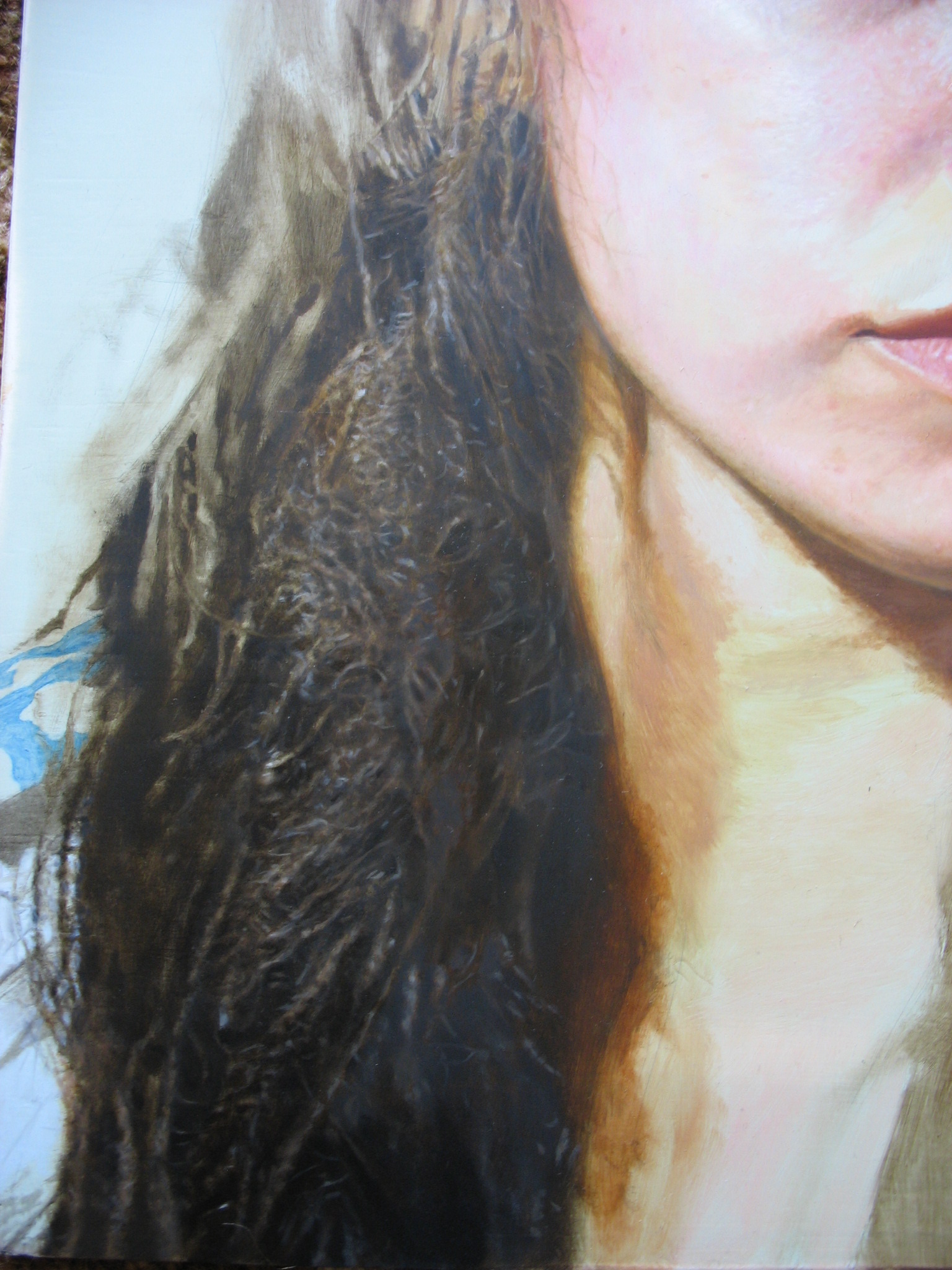
I have always found the unique texture of hair, somewhat challenging to replicate with a paint brush.   Below, is an update of my portrait of Emily, who has thick, lustrous locks of hair (a very distinctive attribute in achieving her likeness).  I’ve been working on this piece off and on for several months, becoming absorbed in those dense, silky waves of texture that flow across her delicate cheek, and onto her shoulders.

I use several different methods for replicating hair.  The detail below, displays a method which requires a thorough understanding of the layering process.  It starts as a solid mid-tone, and slowly becomes darker and darker. Rather than thinking of the hair as individual strands, I look for shapes which describe masses of light and shadow.  These shapes can be large and general, or extremely intricate.  Ultimately I aim to depict every shape that helps to reveal the dimensional qualities of her hair.  High-lights are added selectively after an adequate density of dark shapes are developed, mainly to bring out areas that have become too flat.  The hair alone has been a laborious process that has proven to be much more time-consuming then I had anticipated, but it’s a labor of love!

One of the challenges in painting dark hair in general is that the value range is very close.  Most of the actual strands of hair, with the exception of high-lights, are in the dark to mid-tone range.  Without exaggerating the tonal contrasts, one must pay close attention to the subtle variations of color.  In Emily’s hair, there are numerous ranges of warm reddish-browns, ochres and cool blue-grey high-lights.  Typically I will over-exaggerate the tonal contrasts, and in the final stages, use several large body glazes to integrate everything back into the whole.  As you can see, I still have a ways to go with this one.


Portrait of Emily

August 10, 2010

Ok, so I know it’s been months since I’ve posted a new image.  I have started working on several new portraits using a combination of live model sessions and photographs.  The portrait of Emily below spans about 75 hours of work.  The initial drawing, and color block in was done in class at the atelier where I teach, and I have continued to develop the color nuances and surface details from photographs.  This still has quite a ways to go – I anticipate it taking an additional 100 to 125 hours.

This approach, believe it or not, has actually been moving much faster than my last painting “Passages”, which took about 750 hours. I have been working directly on a celadon ground, which is prepared by mixing oil primer with Chromium Oxide Green paint. I applied at least four coats of this to an oak panel, sanding between each coat.  The end result produced a glassy-smooth surface with a beautiful light green tint ideal for flesh tones.

Unlike with my previous painting, which utilized a monochromatic under-painting, I have been working directly with a full palette, allowing parts of the ground to show through, particularly in the shadow turnings. This approach results in a more vibrant range of colors as opposed to the unified tonality that a grisaille or monochrome under-painting produces.

I will continue to post works in progress as this develops.  I’m also planning on doing another full figure painting of the same model buried in a pool of flowers.  Her beautiful features and soft, melancholy expressions remind me so much of the painted figures of the artist John William Waterhouse.


Workshop at Ellarslie

July 14, 2010

Below is a description posted by one of my students on tawa-nj.blogspot.com/ about a workshop that I taught at the Ellarslie Art Museum in Trenton NJ.  She was a great student, and really seemed to get a lot out of the class.  I’m planning on teaching this workshop again in the fall, winter, and hopefully next summer.  I will post the dates on this blog and my website, http://www.dcrartcommissions.com when I figure out the schedule.  This class has produced some inspired work from beginner and intermediate artists.  I’m excited to continue meeting other artists who are interested in learning and practicing these traditional techniques in their own work.

"I have thoroughly enjoyed the workshop with
David Rivera teaching the Secrets of the Old
Masters. Their grissaile method is an
exciting way to prepare an image. The 15th
and 16th century artists produced radiant pieces
of work using limited number of pigments. The
underpainting executed in shade of one color,
usually gray, molds the form and its tonal values
give an illusion of sculptural relief.

Given countless examples of grissaile painters -
from van Eyck's brothers to Vermeer to Ingres,
we were to choose an artist to study and learn
his technique. I have found Andrea del Sarto's
small piece especially graceful and was eager to
see how much I can learn from him.

This new method that stresses good drawing and
tonal values was in direct contrast to my older
'all prima', direct method of painting. Subsequent
color glazes over the underpainting created luminosity
never experienced before. Guided patiently by
Mr. Rivera, we were discovering the genius
of oil paints - their potential to create
really brilliant detail in jewel like colors.

Old Masters have secrets to share for patient
and devoted students. It was really a pleasure
to participate in this inspiring gem of a workshop.
Many thanks to Mr.Rivera and TAWA."

Jadwiga Wroblewska-Jedrzejczyk