Secret Techniques of the Old Masters Workshop

May 25, 2010

I am teaching a “Secret Techniques of the Old Masters” course starting on June 15th and running until August 3rd at the Murdoch art studio and school, http://www.murdochart.com/, in Bucks County.  If you click on the “spring and summer classes” link on the left of the homepage, you’ll find all the info. I’m looking for some devoted students interested in learning about the traditional approaches in art dating back to the early Renaissance.  Much of what I discuss in this blog is covered in the course.  I begin each lesson with a demo and lecture followed by students working on projects which emulate the same technique of a chosen master artist or artists.  If anyone is interested please contact John Murdoch, http://www.murdochart.com/ or myself, http://www.dcrartcommissions.com/.  This school is relatively new, and we are looking for serious-minded art students.

In addition to individual classes, the school also offers an intensive atelier program which places a strong emphasis on drawing from plaster casts and the live model, followed by grisaille painting, and the basics of color. Though the school focuses on techniques which have been passed down from century to century, we encourage artists to find new and innovative ways to practice these techniques.


The Artist’s Inner World

May 18, 2010

Many have asked me about the story behind “Transitions”, my latest painting posted in previous blogs.  After much thought I have decided to change the title to “Passages” which is far more revealing.  I often don’t like to give people a detailed explanation about my paintings, as I don’t want to lead them into a specific thought process, but rather allow them to formulate their own ideas, based upon their own unique life experiences.  “Passages” no doubt, means something completely different to everyone that views it.  Having stated that, I do feel that a few words unveiling my thoughts might help to ignite a spark of an idea in others, and hopefully generate a discussion.  So much of this blog has been about the technical aspects of my work, so now I will take a detour.

An artist’s inner world is often never fully understood by others – usually because his or her thoughts are too complex to put into words.  My paintings in general are relatively simple on the surface.  I respond to the visual wonders of  light, shadow, color and texture.  But I look for something more than that.  Something which lies beneath the surface of all those visual delights.  Something that stirs an emotional response in my soul, and hopefully in others. To me this is what real art is all about, and I feel that I’ve managed to capture some of that in “Passages”.

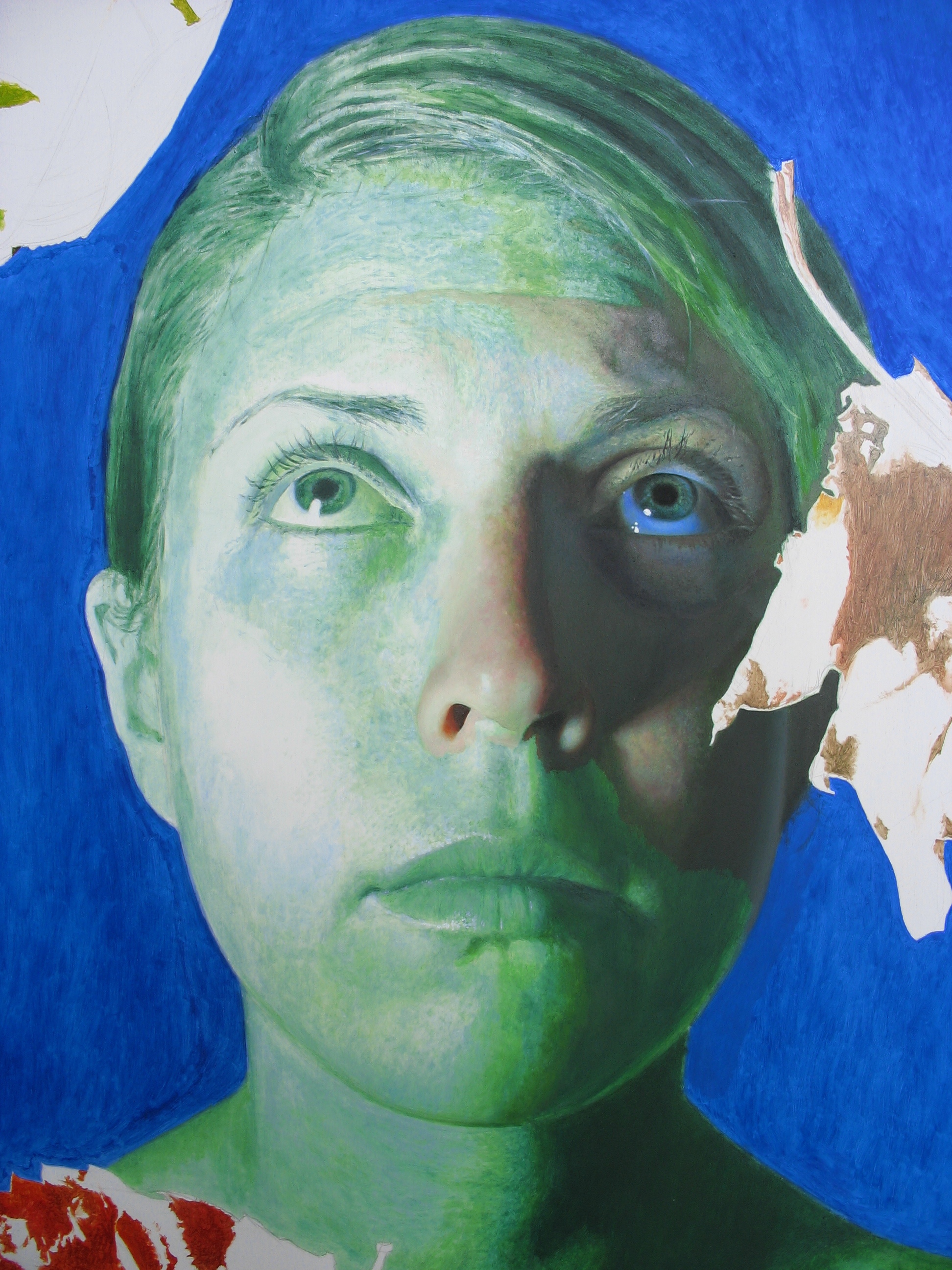
The painting is a portrait of a woman who is in a contemplative state of mind.  She is questioning her own mortality as she witnesses the transformation of  leaves, once fresh and alive, falling to the earth, where they will eventually decay.  Is she distraught, or does she take some comfort in the knowledge that all of life returns to the earth?  Perhaps she is feeling overwhelmed by the wind, an ever present reminder of mother nature’s dominating force.  Life and death pose an inevitable cycle that occurs with the passage of time. “Passages”, therefore, could mean many different things.  Time passes constantly, never stopping for a moment, just like the wind.  Passages of light filter through the atmosphere, creating the prism of colors which reflect back into our eyes.  Emotion, as well, is something that I seek to portray in all my portraits.  Her eyes, hopefully reveal some of the deep emotions that I felt in creating this painting.


Life And The Studio

March 1, 2010

For many artists, including myself, organizing the studio can become a little challenging. My studio is a place for creating art, and teaching.  More recently it has become an office (with the addition of a computer) where I write content for my blogs, and create handouts for my classes.  The space isn’t huge, so, I have to find creative ways of utilizing it.  I’ve spent the last several weeks, building shelving units, organizing folders, filling boxes, etc.; stuff that is not terribly interesting, but necessary for a functional working space.

My goal now that it is finally organized is to start a new series of paintings.  I need to seriously buckle down and work, as my ideas are starting to get ahead of me.  In addition to doing a second panel for “Transitions” which I posted on my previous blog, I am hoping to start a series of miniature still life’s, all of which I will post on future blogs.

I’ve been finding it hard to keep up with my blog due to all of my recent projects, and, as I’m sure most artists would agree, time in the studio dominates all aspects of life.  There simply isn’t enough time in the day to paint, let alone do everything else that life demands.  This blog for me, has been a great way to connect with other artist’s and in so doing better formulate my thoughts about art and teaching.  I truly appreciate all of the wonderful commentary I’ve gotten, and look forward to more.

In other news, I am in the final stages of editing my book, which covers much of the same material as my blog, only in more depth.  Again, this has been a great project, as it has helped me to become a better teacher.  My determination to revive the forgotten traditions of art consumes me.  It is unfortunate that these traditions are so scarcely practiced in art schools today, and, as I continue to deepen my knowledge and develop my voice, I hope to eventually open my own school.

Art is something that fulfills my existence every day.  Nature is filled with mystery and beauty, and is an endless subject for inspiration, and interpretation.  As a teacher my goal is to inspire others to look more closely at the world and translate the visual persona of light, shadow, color, proportion, and perspective into well-formed ideals, built upon structured foundations.  Art with integrity is something that should always be cherished.  That is my voice and passion as a teacher and an artist.


A Modern Approach to a Traditional Technique Concluded (Applying Final Glazes)

January 28, 2010

Finally, this painting has reached it’s final phase.  This is where I evaluate the entire image, specifically looking for areas where colors or values need adjusting.  These final modifications are essential to the overall unity of the painting.  This is where I choose to divorce myself from the visual references that have, thus far, guided my decisions in pursuit of a more creative realization; one which is concerned entirely with delivering an aesthetic beauty to my audience.

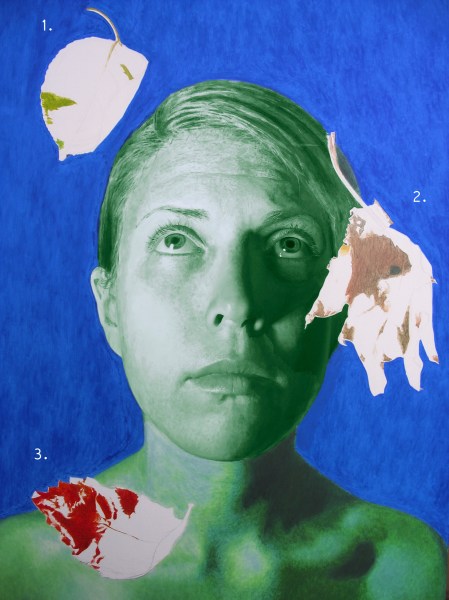
All of the changes made in this phase are done with selective glazing.  This is the icing on the cake.  Sometimes it’s the subtlest of touches that tie everything together.  Below is the completed image followed by details and explanations of the steps I took to resolve this visual idea.  Looking back, there’re always things that I feel I could continue to work on, but at a certain point I have to declare it finished and move on to the next project.

“Transitions” David Rivera, 2010

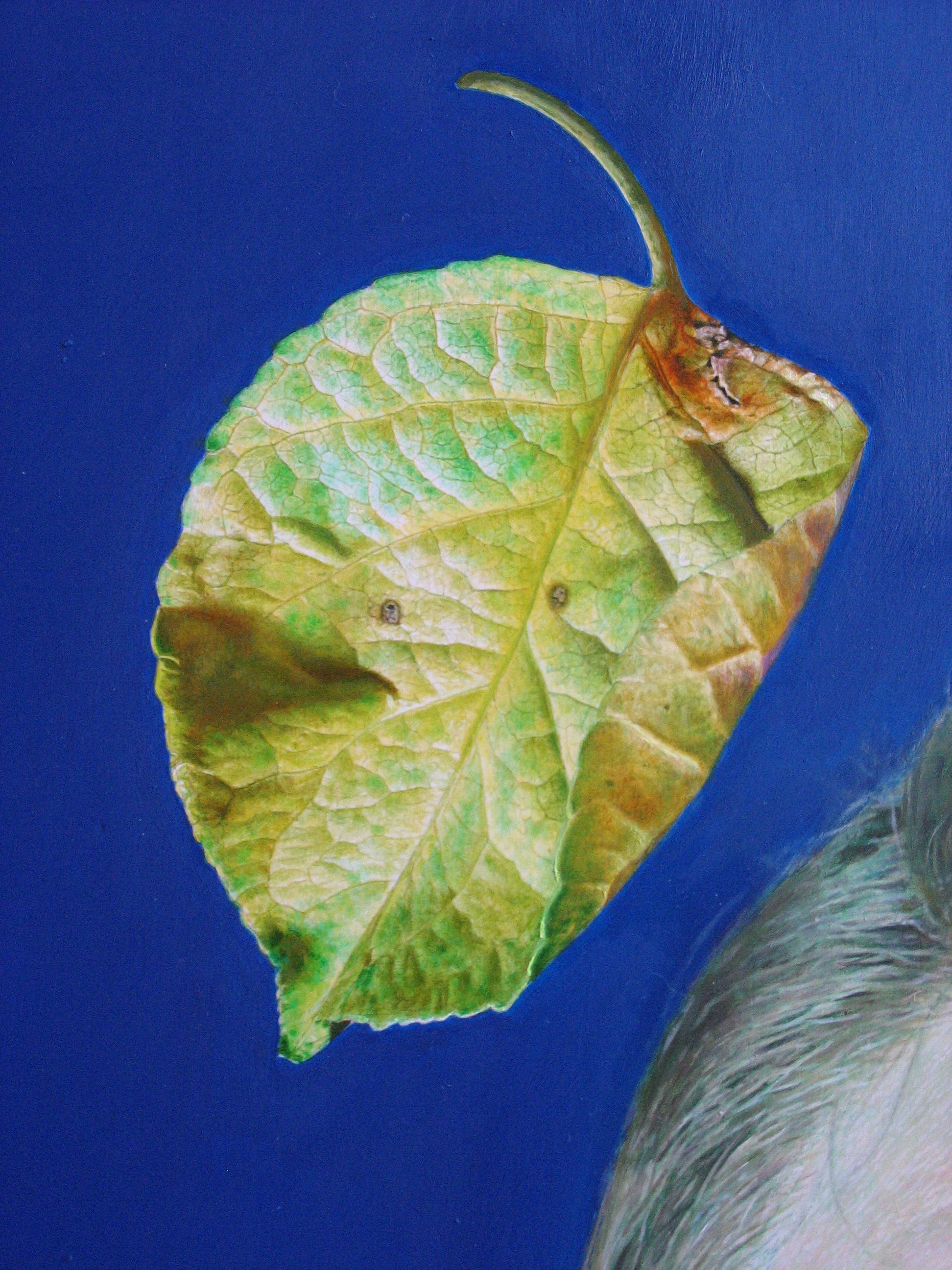
Above, the detailed vein work of the leaf was painted directly onto the white ground with a #10/0 liner brush.  Once dry, glazes of Thalo Green and Cadmium Yellow Light were added on top to integrate the sharp lines into the texture of the leaf and decrease the value contrast.  Contrasting colors, however, are explored to make the leaf shimmer against the blue background.  I introduced Alizarin Orange to the shadow masses, choosing the complimentary of blue, in an effort to play harmonizing “color” notes.

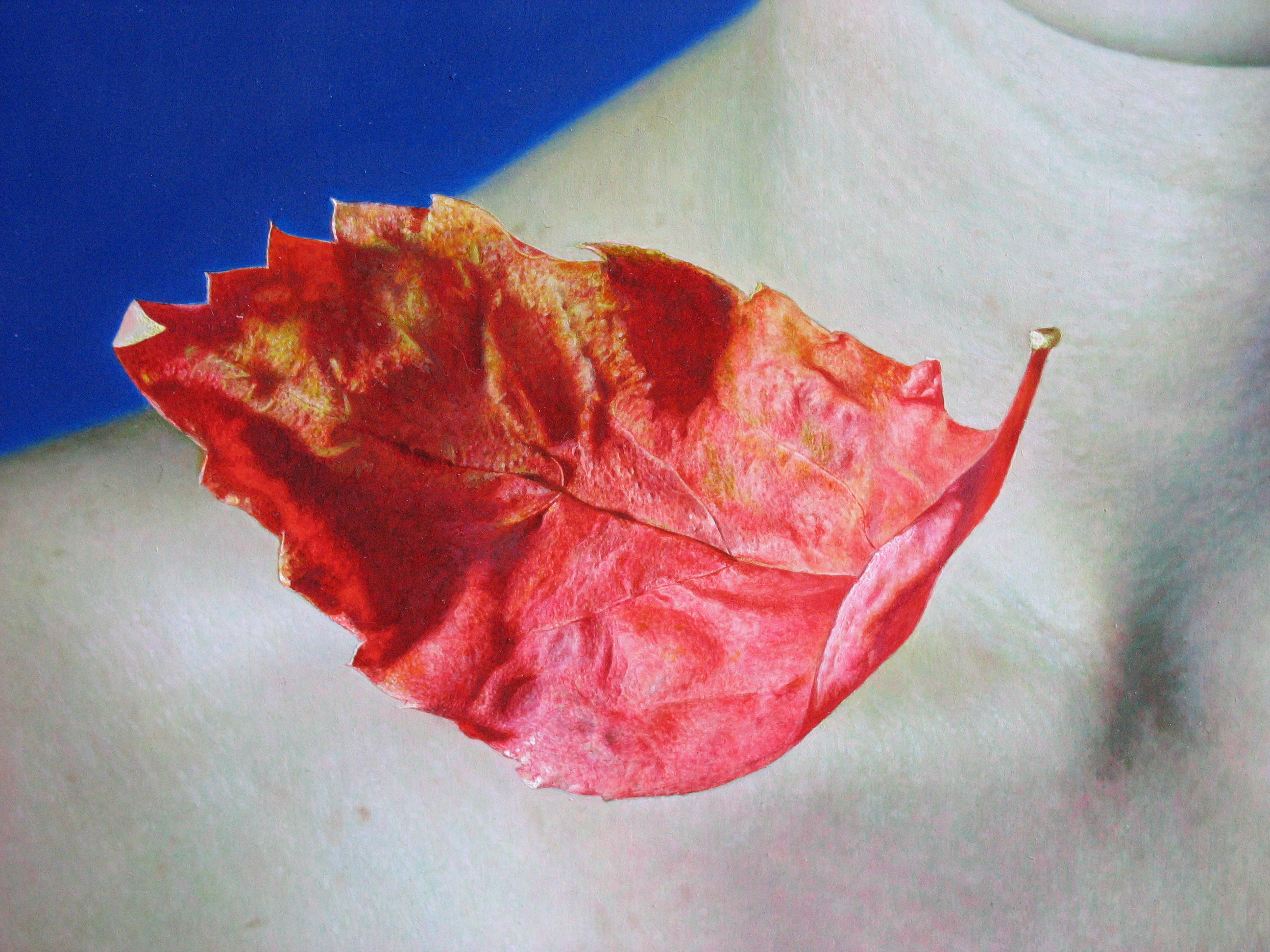
The reds in this leaf were built up with layers of Scheveningen Red, General Rose Madder, Baroque Red, and Transparent Red Oxide, however, upon my final evaluation, I realized they were too red, and applied a general, faint Cobalt Violet glaze.  This helped to de-saturate the vibrant color, and cool it down just enough so that it unified with the blue background.  In the deeper shadows I actually added some of the same blue background color.  Even though it is quite faint, and perhaps not very noticeable in the reproduction, it really helped to unify the colors.


The Influence of Realism in Abstract Art

January 16, 2010

I was having an interesting conversation with an old friend of mine from art school the other day about various “styles” of art.  We both trained traditionally, by studying techniques of the old masters, however, our work has taken two very different directions.  The purpose of painting up until the last century or so was to depict scenes of reality.  The function of an artist has been replaced to a great extent by the camera.  Where once an artist diligently copied what he saw, and went to great efforts to create compositional sketches, and oil studies, can now be captured in a single instant with the camera.   However, what the camera doesn’t achieve, is the emotional component that always filters through the unique interpretation of the artist.

A photograph taken of a particular subject, in a particular setting, with a particular light, using the same camera and shutter speed, regardless of the individual photographer will produce the same image.  In painting, every individual artist will have a different interpretation of the colors, shapes, tones, textures, etc., even if the subject itself is exactly the same.  That is the distinct difference between photography and painting.

My friend in art school was a great realist, but as of late, has chosen to paint “abstractly”.  According to him, he is and will always be influenced by traditional art as well as traditional subject matter.  He applies the same rules of composition, value, color and texture to his art work that he learned from the old masters.

Reality is abstract.  That is aparent in just about anything that can be seen in the world.  Take an ordinary leaf, for example – when viewed closely, one can read the miniscule veins, organic texture, and jagged edges, as a completely abstract form.  Out of context it becomes a work of abstract art.  A great example of an “abstract” realist would be Georgia O’keefe, who painted close ups of animal skulls, and flowers.  By enlarging these subjects to a monumental scale and observing all of the minute details, she allowed the viewers to experience them as something completely new, and in their eyes they became abstract images.  There are of course many other artists who have used this concept as well, but Georgia O’keefe is the first one that came to mind.


A Modern Approach to a Traditional Technique Continued (Creating the Illusion of Surface Texture)

January 6, 2010

In this painting I am dealing with several different types of texture.  As a hyper-realist, I am always striving to create an illusion that transcends mere representation and takes on a physical reality.  I want my audience to forget that their eyes are viewing a flat picture plane, and instead perceive the varied textures (the softness of flesh, the dryness of each leaf, etc.) as something tangible.

In my studies of art history, I’ve discovered a love for seventeenth century, Dutch trompe l’oeil painters.  Trompe l’oeil is a French term, meaning fool the eye.  What I find so amazing about this period of painting, is, especially in still life’s, the fact that every surface is represented with such conviction that it becomes the object.  There is a real understanding about the physicality of each thing (the stitching of cloth, the smoothness of metal, the effects of light on glass, etc.).  These varying surfaces also make for interesting compositions.  Unity with variety is the goal – having enough variation to distinguish each object as a separate thing, but also enough unity between them to hold the composition together.

One of the tricks of trompe l’oeil painting is the controlled build up of the paint to “model” the surface of the panel or canvas and create a relief effect. This is one way to fool the eye into believing in the reality of a three dimensional space.  The build up of paint literally pops out of the flat picture plane and assists in the illusion of depth, even in a shallow space.  Trompe l’oeil painting at it’s best will be able to convince the viewer that the “physical” build up of texture and the painted illusion of texture are one and the same.

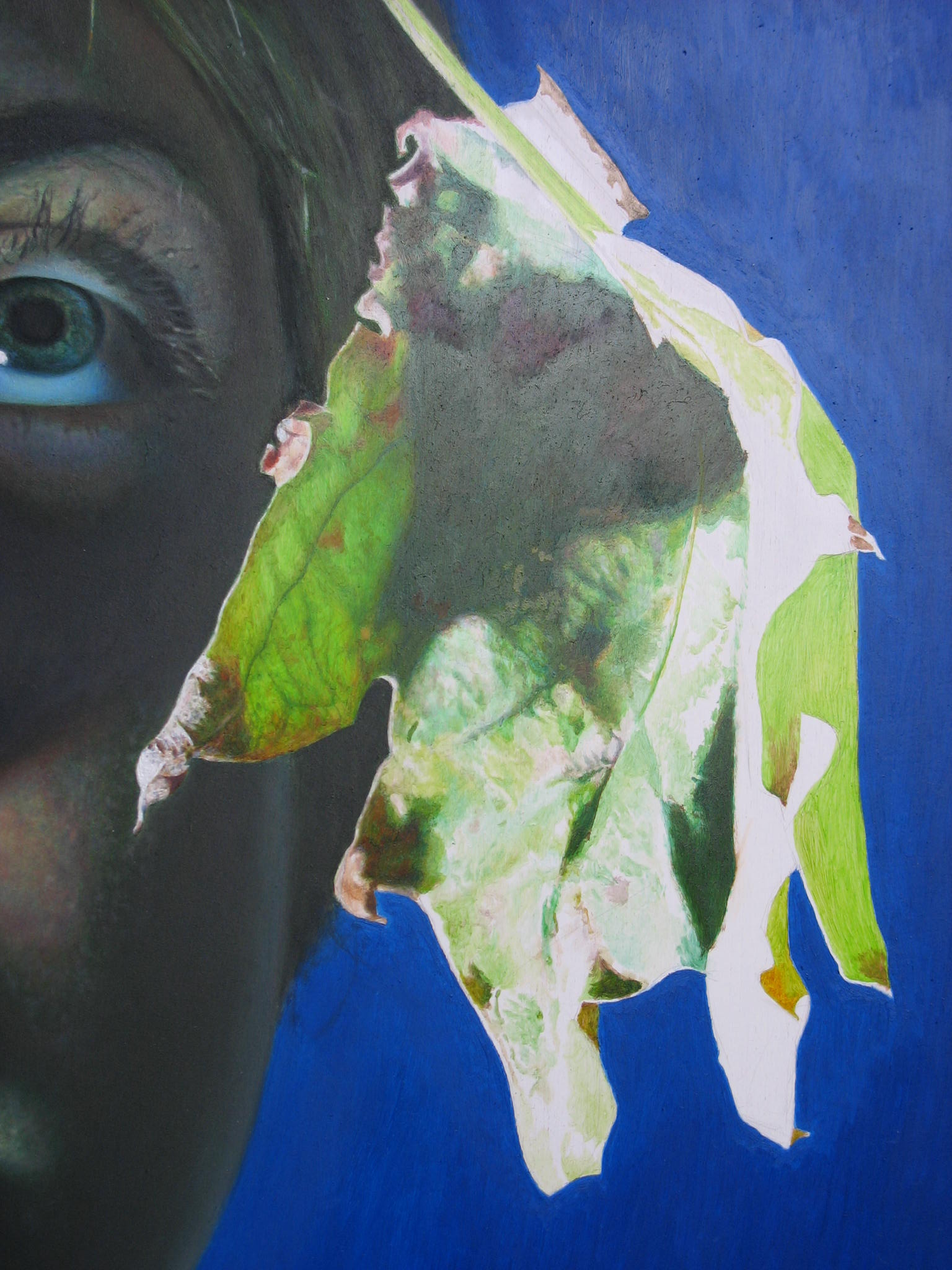
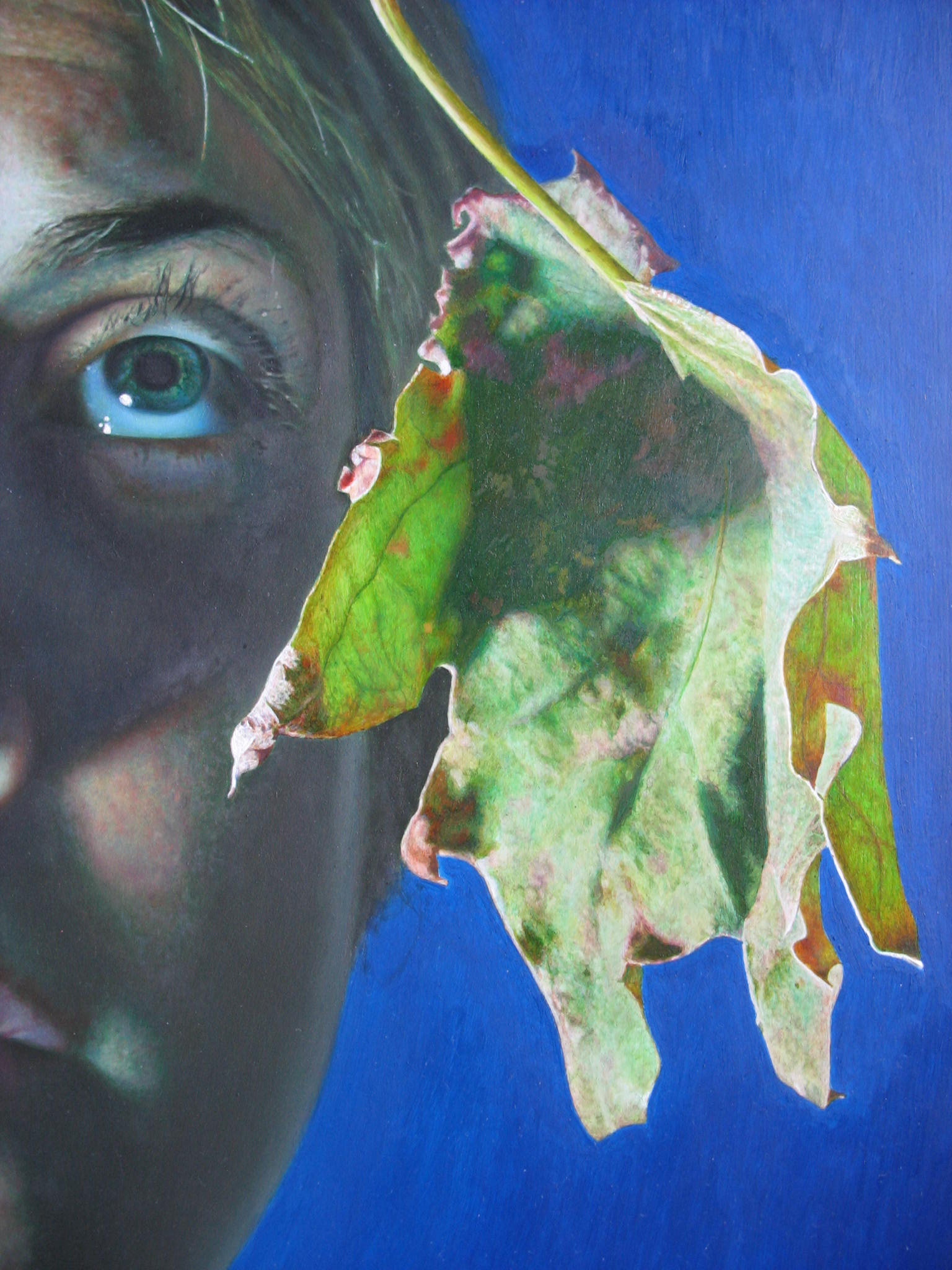
Below, is a step by step display of how I built up the paint layers to create the texture, both physical and representational, of each leaf.  Of course, because the computer screen is flat, it fails to accurately represent the third dimension of the relief, but hopefully some resemblance will be evident.  In the areas where the leaf projects forward the most, I built the paint up opaquely just using white, and later glazed colors over it.  Each leaf has between 4 to 6 layers of glazes.

Step 1.

Thalo Green is brushed transparently over the warm shadow mass.  In the lighter section to the left, a combination of Thalo Green and Cadmium Yellow Light are brushed directly over the white ground, creating an extremely vibrant color which will be toned down with additional layers.

Step 2.

More variations of green are worked into the light mass as patches.  This approach is similar to a watercolor, in that I am working from light to dark, transparent to opaque.  Additional colors are added to the palette such as Yellow Ochre, Alizarin Orange, and Transparent Red Oxide, for some of the warmer variations.  The lightest lights won’t be touched until the final layer of glazing is applied.
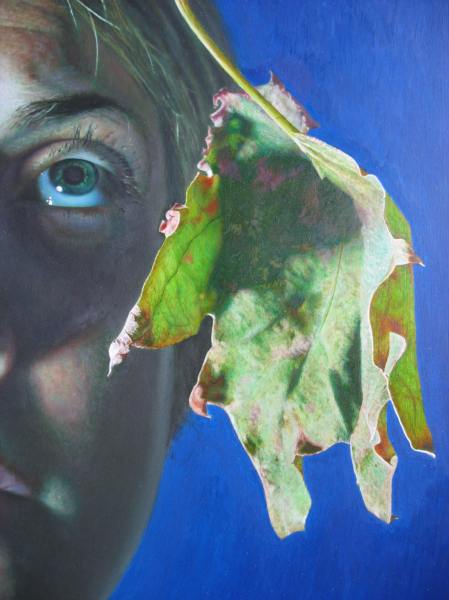
Step 3.

Here I have selectively added real texture with opaque paint in an effort to increase the illusion of three dimensional space.  I used Flake White as a heavy impasto (built up relief) first, and then, when dry, I added the colors on top as glazes.  Opaque white paint was used only where I wanted areas to project.  All other whites were the original oil primed ground untainted by additional layers.  However, final large body glazes were added to refine the tones eliminating most of the pure whites.


Sources of Inspiration

December 29, 2009

Much of what I discuss in this blog is very technical.  But creating true, soulful art involves more than sheer technical mastery.  Art comes from within.  Often I refer to art as visual poetry.  Each individual artist learns how to articulate his or her idea by understanding the tools, and commitment necessary to express it.  The technique becomes the “words” used to express the idea.  And the idea, of course, is the art.  That is the simplest way that I can explain it.

My students often ask me, “where do I find inspiration”.  Inspiration comes from life.  It is much more than what you see in museums or galleries.  It is what you experience in the every day.  The things that touch you most deeply and leave lasting impressions on you.  That could be anything from a sweet, simple moment like waking up in the morning to see a trickle of soft sunlight behind a closed curtain, to walking alone on a rain drenched street on a warm summer night, to the feeling of your lovers hair slipping through your fingers as you caress it.  Feelings that are profound, whether it is love, sadness, anger, desire, or loneliness, are what fuel the soul, and, in turn allow one to express truly emotional art.

I keep a journal, and often I’ll  do sketches for paintings based upon writings in my journal.  The written word for me has a close correlation with the painted image.  Journal writing has allowed me to explore thoughts that are rooted in my subconscious and, when translated into visual imagery, enables me to articulate the ideas behind my work.  But often, when left to interpretation, my work will become to the viewer something much different than I had intended, and this is what I love most.  There is no right answer.  A work of art will create a different response within each and every viewer.


A Modern Approach to a Traditional Technique Continued (Working Opaque Colors Into Your Glazes)

December 17, 2009

It’s been a crazy couple of months, and, regretfully, I haven’t been keeping up with my blog.  Along with laboring away in the studio, I’ve been making adjustments in my work schedule, and simply have not found much time to write new material!  However, I’m now anxious to pick up where I left off, and I don’t forsee any more lapses.

At this stage, I was finally ready to bring my monochromatic portrait to life with color.  I began by adding section glazes which is different from the more traditional approach of a large single color glaze over a broad area.  I focused in on the area around the right eye first, by mixing up a general shadow color with Cobalt Violet, Transparent Red Oxide, Yellow Ochre, and Viridian green.  Before broadly applying the color, I always test it out first in a small section.  By dabbing the paint onto the green shadow mass with a small brush, I was able to determine whether or not it was the right value and chroma.  Remember, colors always look different when they’re transferred from the palette to the actual painting.

Once I was happy with the color, I thinned the paint out with linseed oil to create a soupy consistency which could be brushed over my shadow mass transparently, allowing the darkness of my previous layer to come through.  With the light mass I proceeded the same way, by testing out a small section of color first.  I worked lights into the eye lid, using Naples Yellow as my base color with a # 0 brush.  While still wet, I added Flake White to create a tint as well as hints of Baroque Red, which pushed the hue more towards a pink.  Using very small dabs of paint I began working subtle variations of ochres, browns, and pinks into the wet glaze.  This method allows for easy blending.  By letting parts of the underpainting come through, particularly in the shadow transitions around the eye, I was able to achieve optical color effects.  In the opaques, less medium is used, but the color is still applied thinnly and will be built up with additional layers if necessary.  Using small dabs of color is also helpful in creating the illusion of skin pigmentation.  Skin is not smooth like porcelain, nor is it even in color.  There are infinite variations of color due to blood vessels, pores, freckles, and so forth.  That is why I choose to focus on one small section at a time.  This process allows me to make careful color adjustments and it helps me to observe the subtlties that can so easily be overlooked.

For the white of the eye I used Thalo Blue, Chromatic Blue, and Flake White.  The “white” of the eye, with the exception of the highlight, is far from white.  Because white reflects all colors, one should always search for the color influence in their whites.  Based upon how it is lit, most whites will have an influence of blue, green, violet, red or yellow color.  Almost never will something that is white actually appear white.  For the iris I used a more concentrated variation of the blues as well as hints of Yellow Ochre to reflect some warmer colors.


A Modern Approach to a Traditional Technique Continued (Using Direct Color)

October 21, 2009

For the leaves in this painting I have decided to apply color directly onto the white ground.  This will create rich, fully saturated color, which I thought would contrast nicely with the more neutral flesh tones. I will end up doing a great deal of glazing here as well.  The white ground will reflect through the thin veils of paint to create an ambient light.  This method was used by Jan Van Eyck, a fifteenth century painter credited with the invention of oil painting.  Upon viewing his work some six centuries later, one can truly appreciate his mastery of color.  Within his small scale paintings, there always seems to be an infusion of light.  A light that is crisp (unlike the diffused light of Vermeer, Rembrandt and other great masters) which intensifies the detail of his subjects.

Below I have created a list of the colors used for each leaf.  Because each leaf has a different display of colors it will call upon different color mixtures. I applied the color in the same manner as I did with the portrait, by mapping out the shadow shapes first with translucent layers.  I was cautious not to make my mixtures too dark.  I am not using any white in this phase, so to lighten the saturation or value of a color, I brushed it out transparently and let the ground reflect through.  This approach will keep the colors clean without modifying the strength of the pigment.  The colors I used are produced by Robert Doak, except for the ones that are noted in parenthesis.

1.   Viridian Green, Yellow Ochre, and Cadmium Yellow Light.

2.  Viridian Green, Transparent Red Oxide, Raw Umber, Alizarin Orange (Williamsburg) and Baroque Red.

3.  Transparent Red Oxide, Scheveningen Red (Old Holland) and General Rose Madder.

direct color blog 4


A Modern Approach to a Traditional Technique Continued (Refining the Tonal Transitions)

October 13, 2009

At this stage, my goal is to refine the transitions between my light and shadow masses and begin to depict soft and hard edges.  With a smaller brush, (in this case a #1 round) I applied a second layer or passing over my shadow masses.  The second passing was noticeably darker since I was applying it to an all ready toned area instead of a white surface.  I refrained from adding white to my paint mixture so that my darks would remain transparent.  With this second passing, I also concentrated on covering up all of the visible streaks and choppy brush strokes in the previous layer, as well as adjusting the value.  To make the paint more fluid, I added linseed oil and turpentine in a 50% to 50% mixture.

I then proceeded to mix up each variation of value for my half tones.  In portraiture it is especially important to observe how gradual or abrupt each transition is as it moves from dark to light.  This will describe how the form is turning, and accentuate the features.  The forehead and cheekbones for example have much slower turnings than the nose.  Instead of excessively blending these areas to create the transitions, I mixed separate tints and shades on the palette and carefully applied them in sections in the painting.  If this is done correctly, very little blending will actually need to be done. 

The tonal ranges in the light masses are quite subtle.  For now, I’ve decided to leave my direct light mass a pure white.  I am considering this area to be the same as a highlight on a sphere.  This will later be modified with glazes.  In my less direct lights, I see minor tonal variations due to surface details such as freckles, dimples, pores, etc.  I applied small dabs of paint to depict these minute details, and break up the larger passages of light.  I am still keeping in mind however where my general light is falling as it is very easy to overwork these areas with exagerated tonal variations. 

value transitions for blog